Starting your journey toward a full UK driver licence requires passing the driving theory test first. While getting behind the wheel for practical driving lessons is an exciting milestone, mastering road signs, traffic rules, and hazard awareness is the essential foundation for becoming a safe, independent driver.
If you are currently planning your budget and learning timeline, you probably have plenty of questions about the learner driver theory test. How much does it cost? How many questions do you have to answer? How long does the exam take? In this guide, we break down uk driving theory test fees, exam structures, and practical preparation advice so you can feel completely ready to pass on your first attempt.
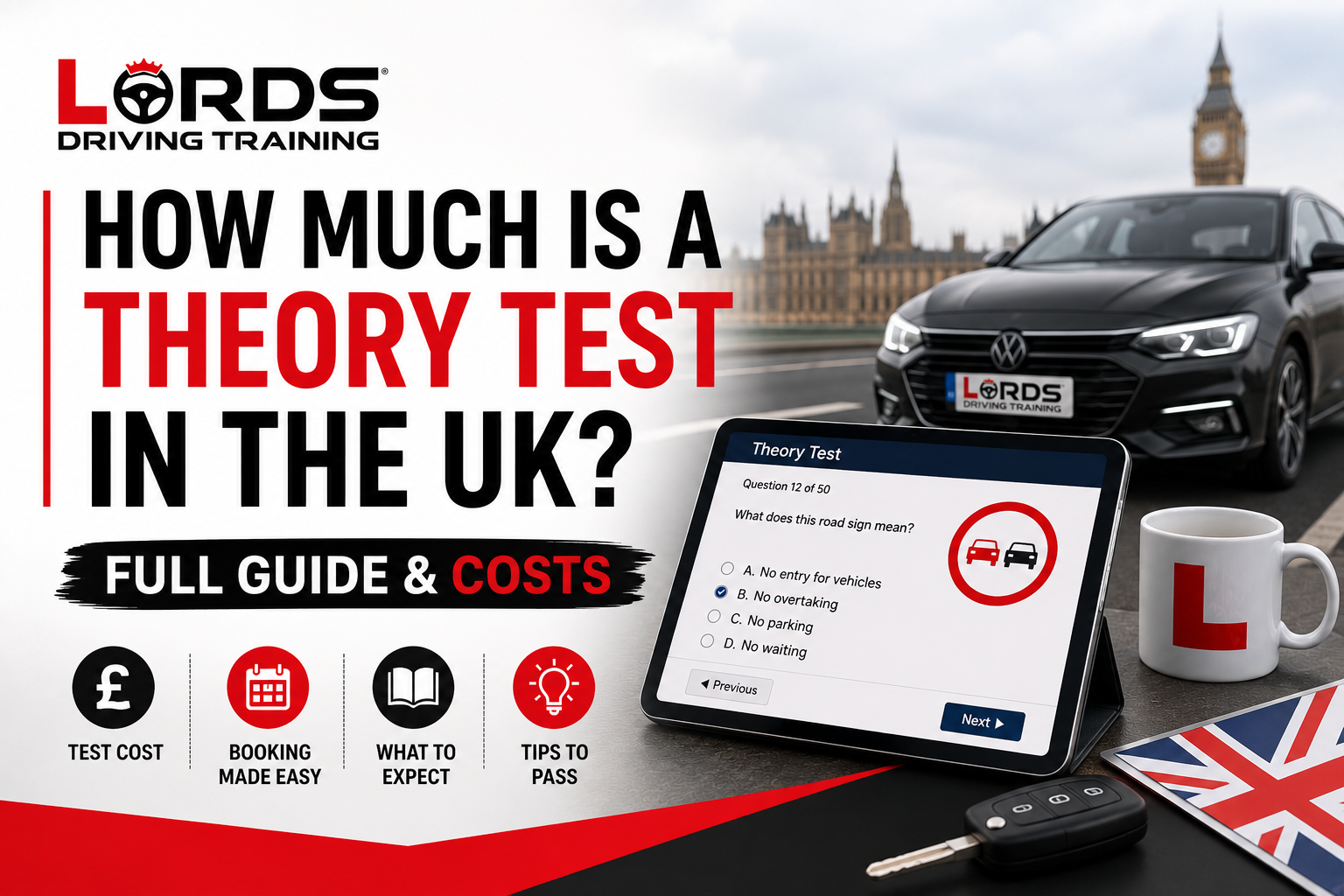
How Much is a Theory Test in the UK?
The standard how much is a theory test uk fee for cars and motorcycles is £23. This rate is set directly by the Driver and Vehicle Standards Agency (DVSA) and applies across test centers nationwide, whether you book for a weekday, evening, or weekend slot.
When you prepare to pay your driving test booking fee, make sure you book directly through the official GOV.UK portal. Third-party agency sites often pop up in search engine results charging extra administrative fees for the exact same test booking. Always double-check that you are on the government page to avoid paying unnecessary charges.
Core Theory Test Fees Overview:
- Car Theory Test: £23
- Motorcycle Theory Test: £23
- Lorry and Bus (Driver CPC Part 1a – Multiple Choice): £26
- Lorry and Bus (Driver CPC Part 1b – Hazard Perception): £11
Test Format: Questions, Structure, and Duration
Understanding what to expect on test day reduces nerves and helps you manage your time effectively. The theory test for driving consists of two separate sections taken in one sitting at a local computer-based test center.
1. The Multiple-Choice Section
- How many questions for driving theory test: You will answer 50 questions selected at random from the official DVSA question bank.
- Pass Mark: You need to score at least 43 out of 50 (86%) to pass this section.
- Driving Theory Test Duration: You are given 57 minutes to complete the multiple-choice section, giving you roughly one minute per question.
2. The Hazard Perception Section
- Format: You will watch 14 video clips featuring everyday driving scenes filmed from a driver’s perspective.
- Hazards: The clips contain 15 developing hazards in total (13 clips have one hazard, while one clip features two hazards).
- Pass Mark: You need to score at least 44 out of 75 points.
- Duration: This section takes approximately 20 minutes.
Overall, when asking how long is uk theory test sitting time, you should plan to spend about 1 hour and 15 minutes inside the testing room, which includes a short introduction and an optional brief break between the two parts.
The Link Between Theory Test and Practical Driving
It is common to view the theory test and practical driving exam as two completely separate requirements, but they work hand in hand. The knowledge you build while studying the Highway Code directly informs your decision-making on the road during practical tuition.
For learners located in Greater Manchester who want structured support, enrolling in a tailored Driving Licence Theory Test in Bolton course can help simplify complex concepts and hazard timing. Localized classroom instruction or structured online coaching helps you master the material faster than trying to memorize static questions alone.
Proven Preparation Strategies to Pass on Your First Try
With national pass rates lingering around 45%, more than half of all candidates fail their theory test due to underpreparation. Following a structured study plan ensures you stay on the winning side of that statistic:
- Start Studying Early: Do not wait until a week before your test date. Spend 20 to 30 minutes daily reviewing the Highway Code over four to six weeks.
- Use Official Practice Apps: Practice mock tests using official DVSA revision software to familiarize yourself with the question wording and timer.
- Master Hazard Perception Timing: Click as soon as you see a potential danger start to develop into an active hazard. Avoid frantic or rhythmic clicking, as the system flags this as cheating and awards zero points for that clip.
- Flag Difficult Questions: During the multiple-choice section, you can flag tricky questions and return to them before submitting your final answers.